Saturday, February 15, 2014

Faldoni, part 2788 - 2791

 2788. Many of his strips involve scenes which can be considered as miniature paintings. Since Li’l Abner’s series of images tells a narrative story, then the series has a lot in common with Medieval religious painting or the sort Faldoni and his contemporaries were doing. And so, exactly like Faldoni and the master painters of the past, so much work had to be done every day that apprentices were employed to do all of the busy work.


2789. In the comic strip Li’l Abner, the great complexity of the strip can be explained by the fact that Mr. Capp reserved for himself the important task of the faces of the characters, and everything else was often completed or even created by his assistants.

 
2790. Looked at in this way, it becomes clear, that the reason those old painters were able to craft their paintings to such perfection in the details, was because there was often a small army of servants doing everything from grinding the colors to filling in the endless details of the clothing, landscape and architectural backgrounds. Yes, the great art of the past that we admire and strikes us as so astounding in its minute execution, was made possible by servitude, pure and simple.


2791. From the pyramids of Egypt, to the Coliseum, from the wall paintings of Pompeii to the Sistine Chapel all the great art of the past was build upon a foundation of what can only be described as slavery, or indentured servitude.

Friday, February 14, 2014

Faldoni, parts 2784 - 2787

 2784. They have on their side the great painters, the ones they named, and like in a sporting event, you can be sure they have many others sitting on the bench, great artists who liked to paint hair and leaves and such, and they are going to trot them out if I continue in my attempt to elaborate my concept.


 2785. Well, I have my artists also, artists that I can use to prove that serious artists who are truly creative do not like to paint individual strands of hair, twigs, spots on frogs, moisture on window panes, or any of that little tiny stuff. The artist I am going to use to prove my ideas is none other than the great Al Capp.


 2786. You may not know who I am talking about when I mention Al Capp, but you will recognize the name when I remind you. Al Capp, one of the greatest artists of the twentieth century, created the comic strip “Li’l Abner.” 


2787. Mr. Capp drew his comic strip for over forty years, keeping a story running every day of the week, and a separate story for Sunday. His figures, although they evolved over the years, from the beginning were very detailed in both their clothing, their environments, and also their facial expressions.

Thursday, February 13, 2014

Faldoni, parts 2780 - 2783

  2780. To annihilate my argument they will quote the well know fact that the contemporaries of Leonardo marveled at his “Last Supper,” because in his painting in the original state, the table cloth was said to have displayed the weavers art, thereby indicating that he must have somehow painted the very warp and weave of the cloth.


 2781. Having listened to all of the astute criticism of my ideas that have been thrown at me by my critics yesterday, I am almost at a loss to know what to say or how to respond. I was simply trying to point out that the painting of very careful detail in paintings is a monotonous task, and so runs a bit contrary to what we think of as the creative impulse. That was all I was trying to say!


 2782. But my enemies, who are always trying to belittle my ideas and undermine my confidence in myself have trotted out Van Eyck, and Holbein, Durer, and even Leonardo da Vinci to not only prove me wrong, but make it look like I am just an amateur who does not really know anything about art history, and the old masters.


2783. Well, so what if I am just an amateur, and have never published any books about art or architecture, does that prove that I am wrong? No, it does not prove me wrong, but I have to admit that I was so stumped by those criticisms that I almost did not write anything today. My page was almost blank as I waited for some idea to pop into my mind, some concept that I could use to fight back against my detractors.

Wednesday, February 12, 2014

Faldoni, parts 2776 - 2779

 2776. But a great many people want that person to sit down in a chair from morning till night and paint one strand of hair after another, a process that would be as deadly as knitting a hooked rug in hell for all eternity.


2777. Even though I say it is not possible to paint all the hairs on the head of a figure, or all the fur on a dog, I am sure there are knowledgeable people out there, people who have spent time in the famous museums of Europe and America who are right now shaking their heads in disgust at what I have been saying about painting hair and the one hair brush, and I am sure it they had a chance they would instantly reduce my ideas and observations to cinders.


 2778. They would reduce my observations to ashes by pointing to Jan Van Eyck’s little dog in the painting “The Arnolfini portrait,” and after that they would dig out one of those Holbein portraits that people know from the life of Henry the Eighth. Then they might spend some time projecting slides of Durer’s paintings, blowing them up in an enlarger and pointing to the individual hairs of his painting of a rabbit. 


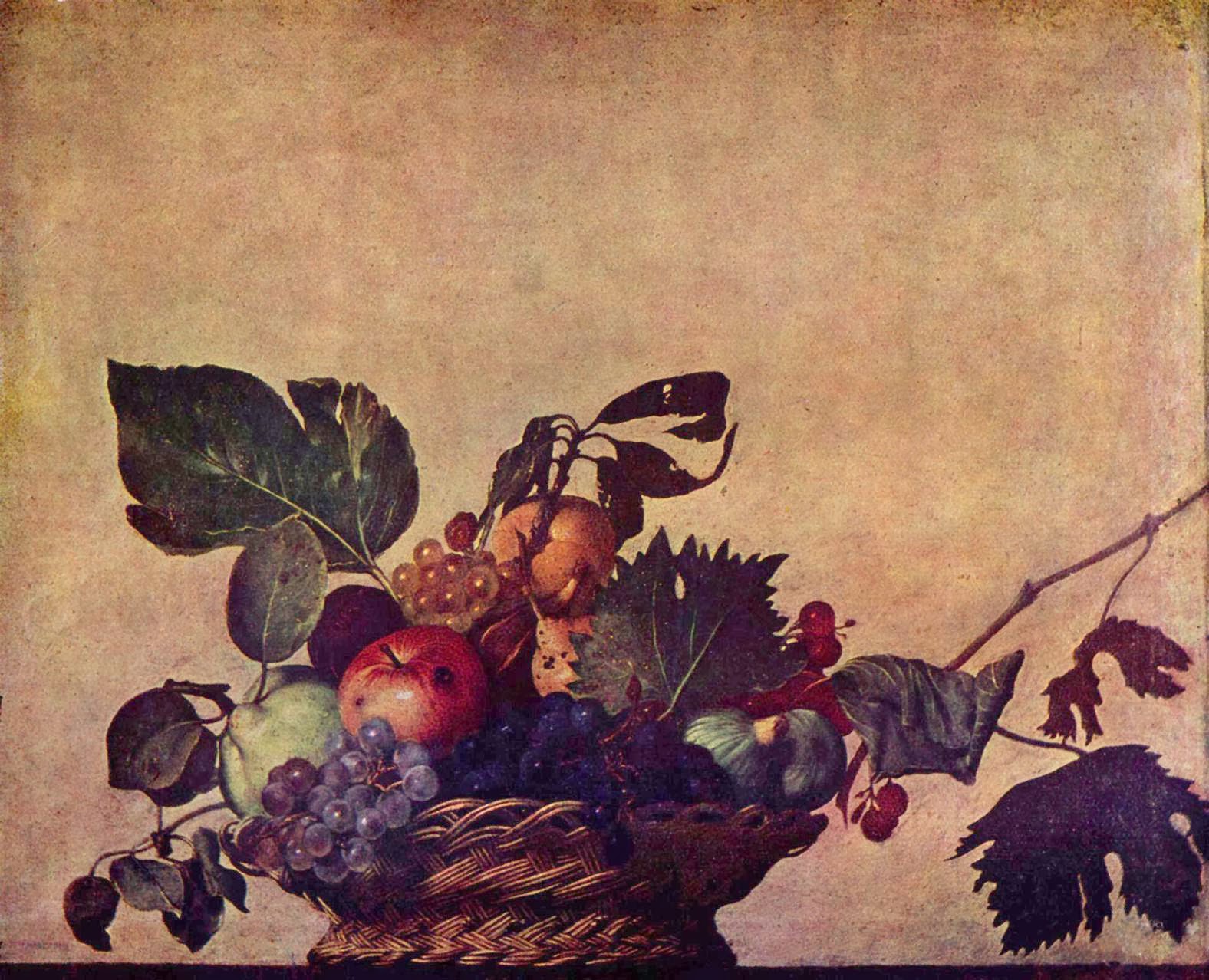
2779. Also, anticipating that I will counter with the argument that all of those artists were Northern European or even German, and that those cold Northern climates did produce odd temperaments willing to torture themselves in that tedious way, seeing that I might say something like that they probably will proceed to mention Caravaggio.

Tuesday, February 11, 2014

Faldoni, parts 2772 - 2775

 2772. The thing about these three things that bedevil the art of painting is that they are all made up of very fine individual parts, and all of these parts are clearly discernible by the eye. In a painting, when these subjects are dealt with, the eye is just simply not satisfied unless it gets to see all of the individual elements of the hairs in all their glory. 


 2773. It just so happens that when we are looking  a specific head of hair it is impossible to focus on each individual strand, contemplate it, and consider its unique individuality. But, even so, the eye, especially the untrained eye, not used to looking often at paintings, expects the artist to deliver the hair in its entirety, in all of its manifest complex glory.


 2774. But it’s not possible. One would have to imaging that there is, somewhere, a paint brush consisting of just one hair, and using the one hair brush the artist paints all of the hairs of a dog, a goat, a horse, or some beautiful woman, leaving out not a single strand. But there is no such thing as a one hair brush, and even if there were you must have some consideration of the poor artist whom you are encouraging to begin the job of painting all of the hairs of the human head.


2775. The artist perhaps decided to be an artist for very flamboyant, emotional and lofty reasons, reasons clouded in mystery, and touching the deeper recesses of the soul. The artist wants the experience of doing a painting to, if possible, induce euphoric states of mind that a drug addict might envy.

Monday, February 10, 2014

Faldoni, parts 2768 - 2771

 2768. Using the frame to chop off a major part of a difficult subject of a painting is an old and important trick in the painters trade, and there are many others whose employment, far from hurting a composition, makes the composition more complex and varied. We will need to discuss some of these odd devices and practices.


 2769. But before we talk of those tricks we must answer the question, what answer does the painter give to the question of why the shadow went out the left of the painting on the left, and out the right of the painting on the right? 


 2770. The painter will say, hoping to evoke a laugh from his critics, “Because the obelisk was painted in the morning when the sun was on the left hand side, and the dog was painted in the evening when the sun was on the right hand side, so that was just the way it was.”


2771. Leaves and branches are just like two other things, the bane of the painter’s existence, those things being hair, and the textures and little patterns of cloth.

Sunday, February 9, 2014

Faldoni, parts 2764 - 2767

  2764. Another difficult thing to paint is foliage. Many great paintings have come to grief because of the difficulty and complexity of foliage, especially the countless little leaves and the branches. Since leaves and branches are so hard to paint the artist often treats them in the same way as shadows; he paints as many leaves and branches of a tree is he can stand to paint, and then has the rest be cut off by the frame of the picture. 


 2765. So it is that often you will see a scene painted, let us take for example some old master picture of Mary and Joseph on the flight into Egypt. If there is a tree in the composition, you can be sure that its leaves and branches will be coming in from the side and cut off by the edge of the frame.


 2766. Much better still is to leave the trees out altogether, just put the figures in a desert.  But leave the bulk of the foliage and branches to the imagination of the viewer of the picture; don't attempt to deliver the details in all their infinitude. Worst yet, and to be always avoided is the tree, the top of which can be seen, sitting right there in the middle of the picture.


2767. A complete tree, right in the middle of a composition, requires an infinite amount of time to even begin to indicate its complexity, and yet, at the same time, by it size, reduces the important parts of the picture — the figures — to such a small size that they look like puppets or mannequins.